Item content. Click the edit button to change this text.
Advertising design
Briefing
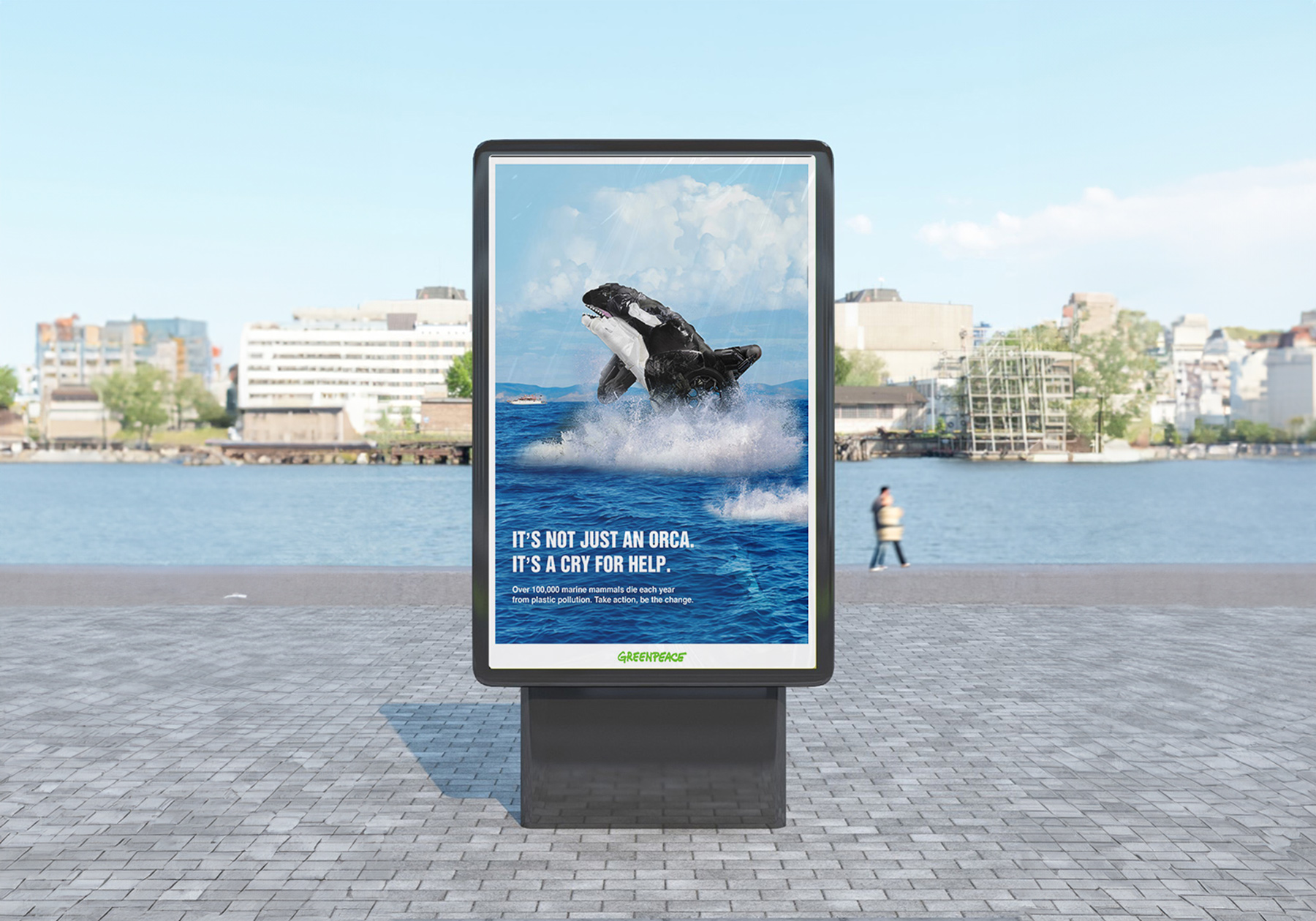
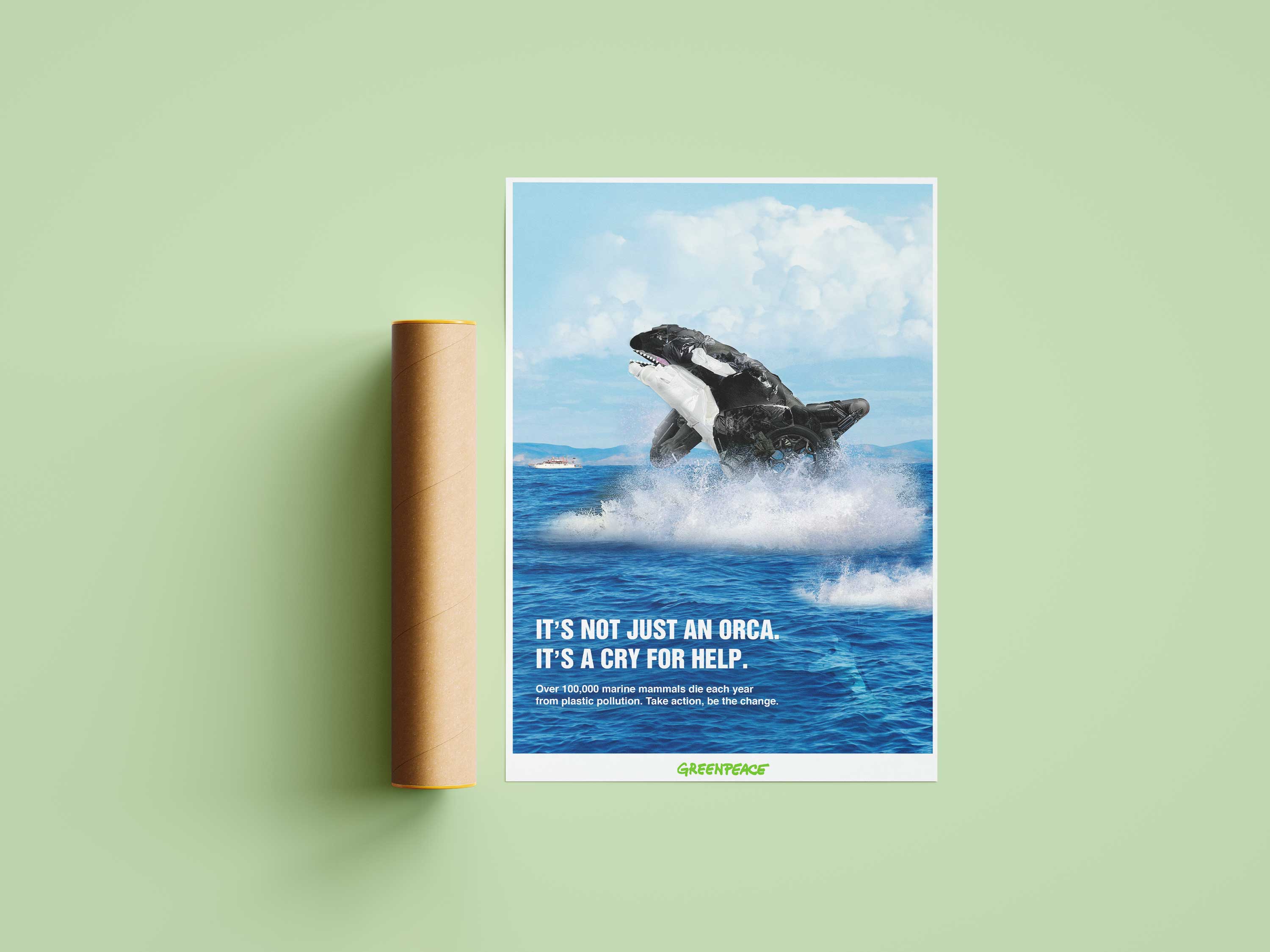
Visual campaign designed to raise awareness about the devastating impact of plastic waste on our oceans and marine life.

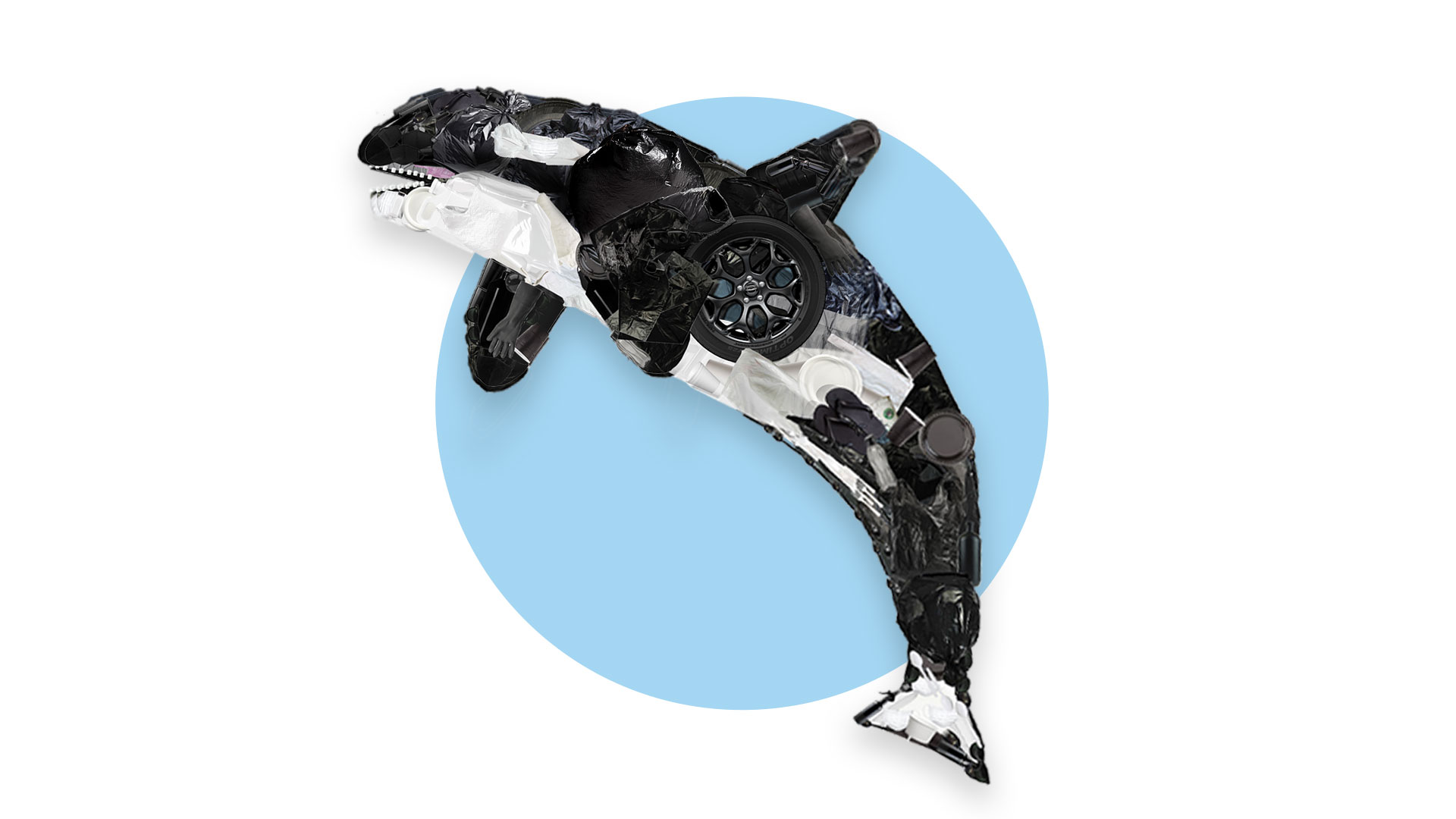
I chose the orca as the central element of the poster—an iconic, endangered species that suffers deeply from plastic pollution passed up the food chain. Their striking black-and-white form and streamlined shape made them a powerful and visually compelling symbol for this message.
Process & Design Tools
Investigation
Plastic pollution is a major environmental threat, with over 12 million tons dumped annually into oceans, affecting marine life and food chains (Gallego, 2020). Demetre (2022) emphasizes the severe impact on whales, calling plastic “one of the most pervasive pollutants in the ocean.” Gallego (2020) warns that by 2050, oceans may contain more plastic than fish, prompting the UN to designate June 5 as World Environment Day.
Alarming statistics highlight the scale: one million plastic bottles are sold globally every minute (Gallego, 2020), and the total annual production of plastic equals the weight of all humanity. By 2020, plastic production surpassed 500 million tons, with nearly 80% being single-use items (Gallego, 2020). Many plastics take 100 to 1,000 years to degrade, posing long-term environmental risks (¿Te Has Preguntado Cuánto Tarda En Degradarse El Plástico?, 2022).
Watch Greenpeace's video "How Plastic Pollution is Creating an Environmental and Health Crisis"
The main target audience
The public mainly in the US and Canada but also can include people residing in New Zeland, Australia, Greenland, and Europe.
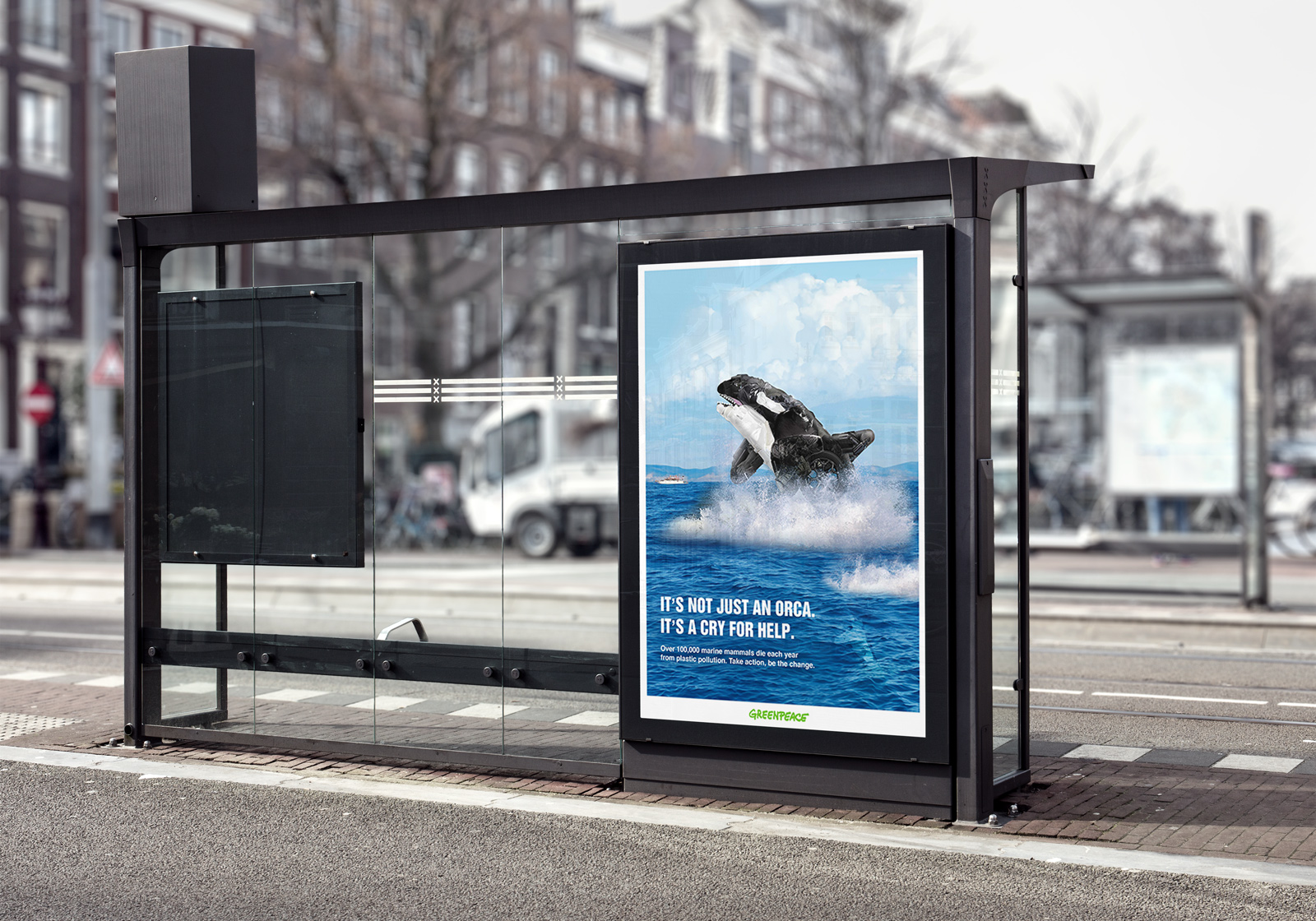
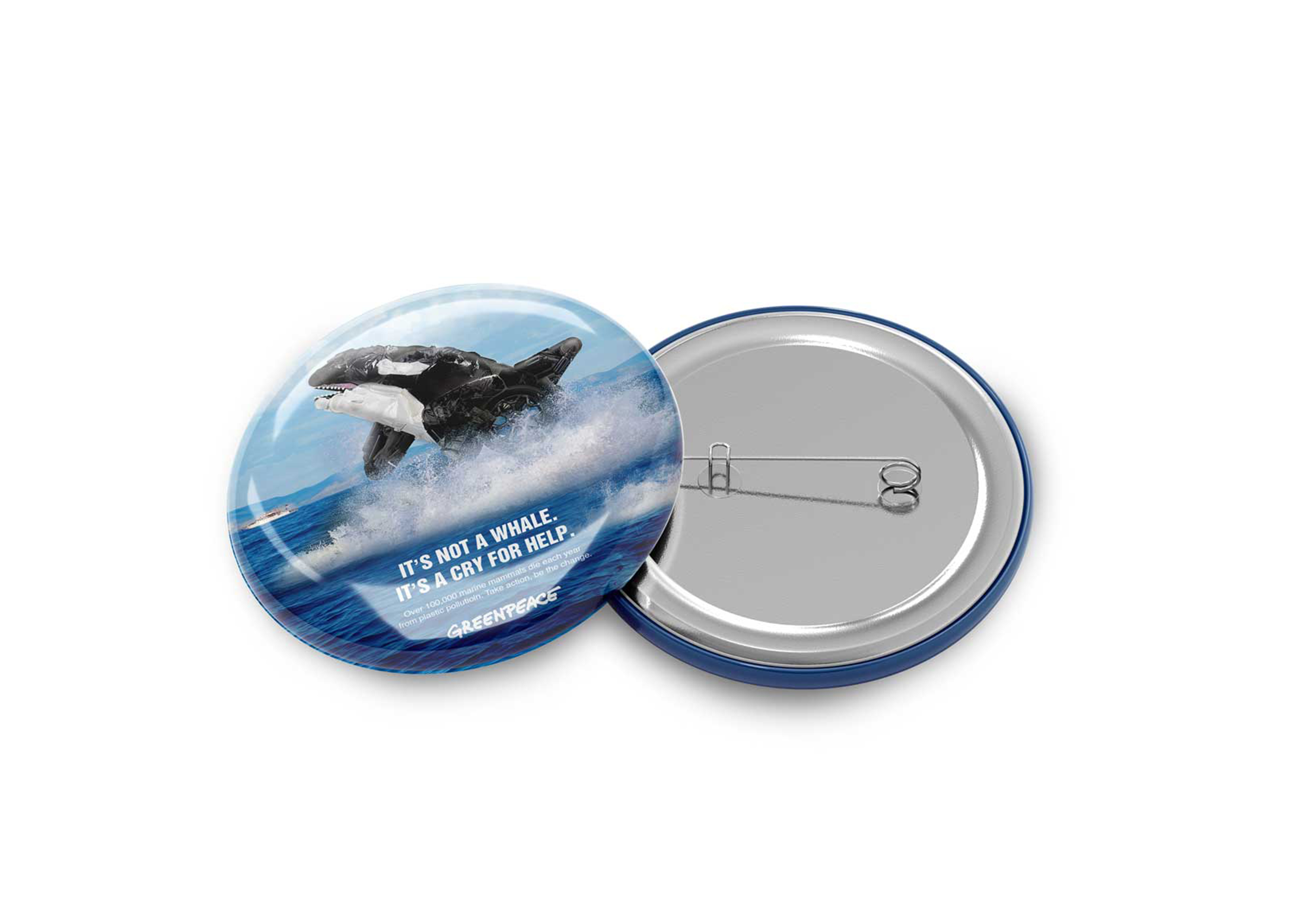
Printed and published on bus stops, billboards, and pins.
Approach
To design a visually impactful poster using the “Assemblage” technique and scholarly sources to raise awareness about the environmental impact of plastic waste on the oceans, promote marine conservation, and encourage a reduction in plastic consumption.
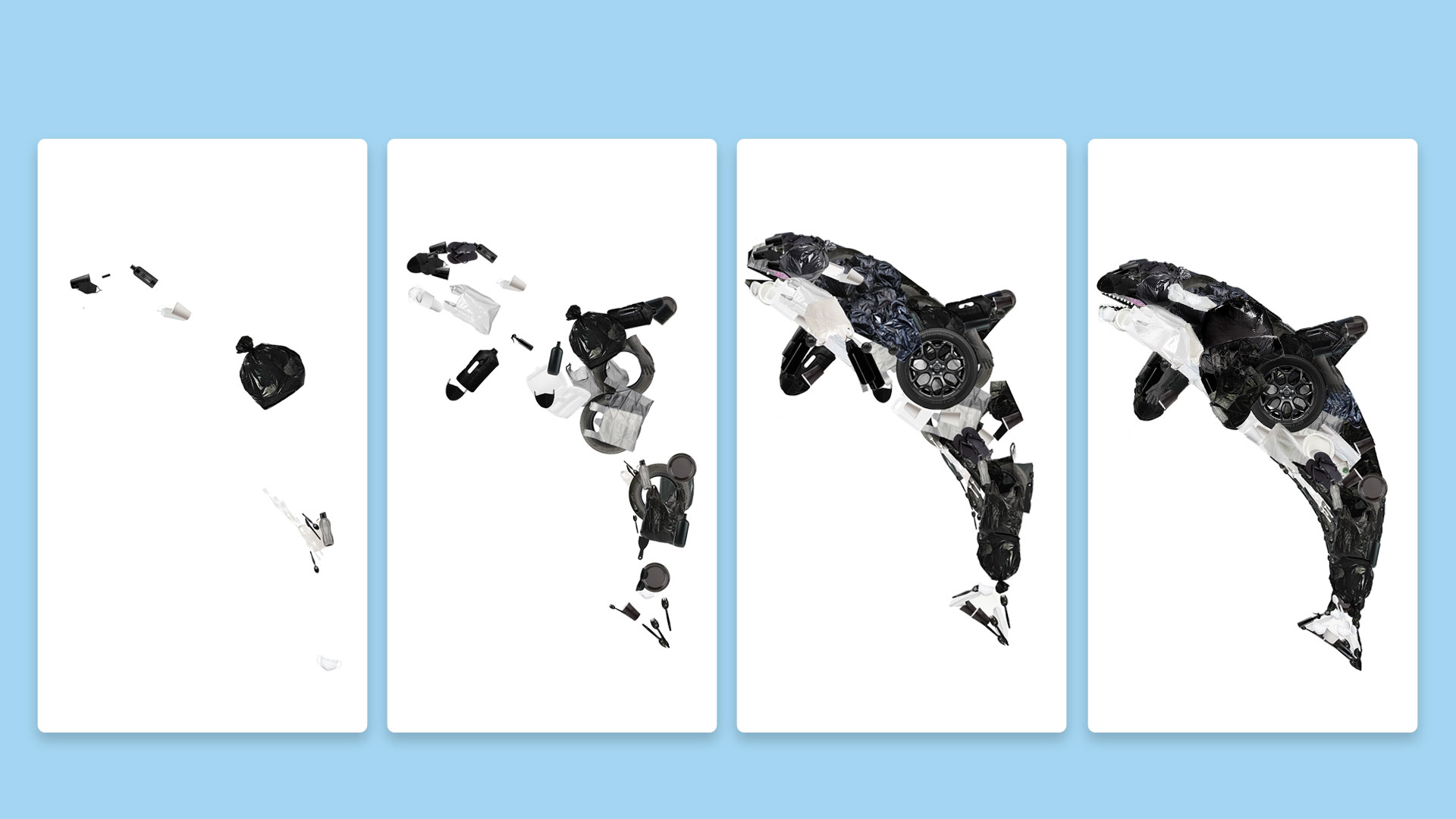
The step by step whale design
Car tires
Car tires release microplastics as they wear down—up to 1.5 million tons globally every year, much of which ends up in oceans.
Source: National Geographic, 2023
Plastic bag pollution
Curious Fact: A single plastic bag can take up to 500 years to degrade and often ends up choking marine animals. Source: WWF, 2022
Plastic cup waste
Over 16 billion disposable plastic cups are used each year, many of which are not recycled and pollute our oceans. Source: EarthDay.org, 2023
How many plastics can you spot on the whale?
Final deliverables
Printed and published on bus stops, billboards, and pins.
In the poster, the orca is shaped entirely from ocean pollutants like single-use plastics, bottles, tires, and masks.
This duality communicates both the urgent need to protect marine life and the critical role plastic pollution plays in their endangerment.
References
Caldas, S. (1992). Crea, Diseña, Siente. Hoaki Books, México, p. 182.
Demetre, D. C. (2022, December 23). How Does Pollution Affect Whales – Ocean Pollution and Whales. Natureweb. Retrieved January 6, 2023, from https://natureweb.co/how-does-pollution-affect-whales/
Gallego, J. L. (2020). Plastic Detox. Grupo Planeta, México, p. 192.
Greenpeace España. (2019, May 16). El reciclaje no es la solución. Retrieved November 20, 2022, from https://es.greenpeace.org/es/sala-de-prensa/comunicados/el-reciclaje-no-es-la-solucion/
Heller, E. (2020). Psicología del color: Cómo actúan los colores sobre los sentimientos y la razón (1st ed.). Editorial Gustavo Gili.
Ecoembes. (2022, November 21). ¿Te has preguntado cuánto tarda en degradarse el plástico? Retrieved January 12, 2023, from https://ecoembesdudasreciclaje.es/cuanto-tarda-en-degradar-el-plastico/
De la O, M. V. (2021, January 3). Cubrebocas habrán provocado hasta 6 mil toneladas más de contaminación marina en 2020: informe. El Financiero. Retrieved January 6, 2022, from https://www.elfinanciero.com.mx/mundo/cubrebocas-habran-provocado-hasta-6-mil-toneladas-mas-de-contaminacion-marina-en-2020-informe/